
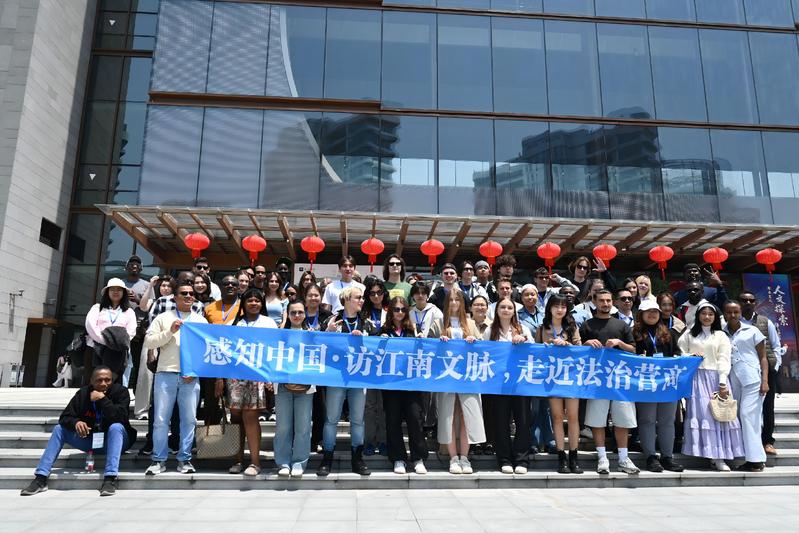
Recently, to help international students gain a deep understanding of China's rule of law construction, history, culture and ecological civilization, the International School of our university organized more than 70 international students from Nigeria, Russia, Poland, Laos and other countries to participate in a three-day educational study tour in Hangzhou and Qiandao Lake. They visited West Lake, the Zhejiang Merchants Foreign-Related Legal Service Center, Zhejiang Provincial Museum and Qiandao Lake, and came to understand "Rule of Law China"and "Beautiful Zhejiang" through practice.
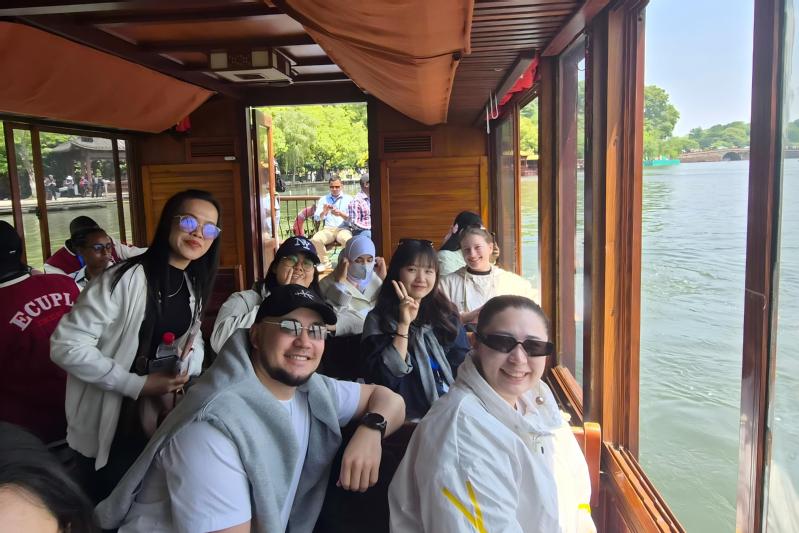
Onthe first day of the activity, the teachers and students arrived at West Lake in Hangzhou. For many international students visiting the Jiangnan region forthe first time, West Lake's charm of "being equally charming in light or heavy makeup" left them in awe. On the cruise ship, a student from Nigeria said excitedly: "Chinese landscape paintings come to life in three dimensions; they are absolutely stunning!"
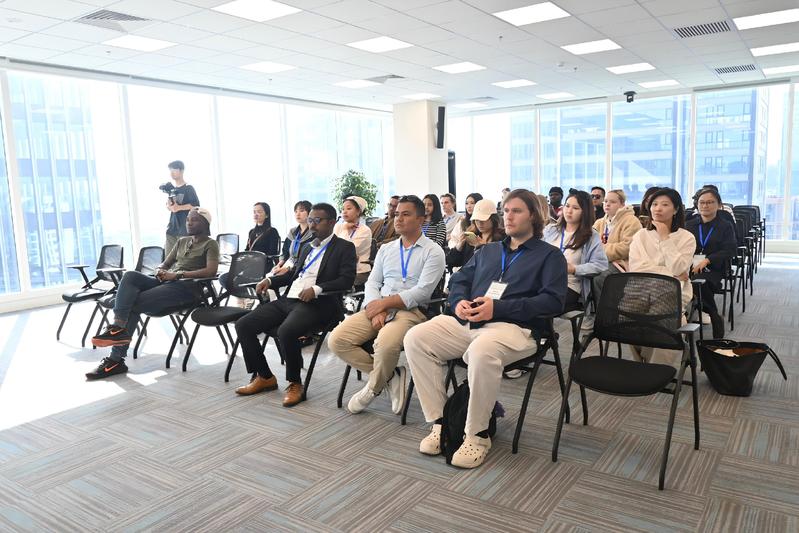
In the afternoon, the itinerary featured its highlight ― a visit to the the Zhejiang Merchants Foreign-Related Legal Service Center. Through on-site visits and professional explanations, the international students gained an in-depth understanding of how this platform provides solid legal support for the globalization of Zhejiang merchants. By establishing global service hubs and intra-provincial coordination networks, the center has achieved the global allocation and cross-industry integration of legal service resources. It also relies on a response hotline and a diversified dispute resolution platform to provide all-round protection for enterprises expanding overseas. These measure shave not only effectively safeguarded the legitimate rights and interests of both Chinese and foreign market entities but also served as an important window for promoting international economic and trade cooperation and legal exchanges.The international students engaged in face-to-face exchanges with senior legal practitioners from institutions such as Guangdong Huashang (Hangzhou) Law Firmand Zhejiang Ningbang Law Firm. Drawing on specific cases, the lawyers analyzed the legal protection systems urgently needed by enterprises in the process of "going global" and elaborated on the pressing demand for foreign-related legal talents in the current international market. The exchange session was lively, with each international student introducing themselves,sharing their past experiences and future aspirations ― some hoped to engage in foreign-related legal services after returning to their home countries to build bridges between China and the rest of the world; others aspired to work in the legal departments of multinational enterprises to safeguard international economic and trade cooperation. An international law student from Southeast Asia said: "The modern legal service system here has left a deep impression on me, allowing me to see a more three-dimensional and rule-of-law China."
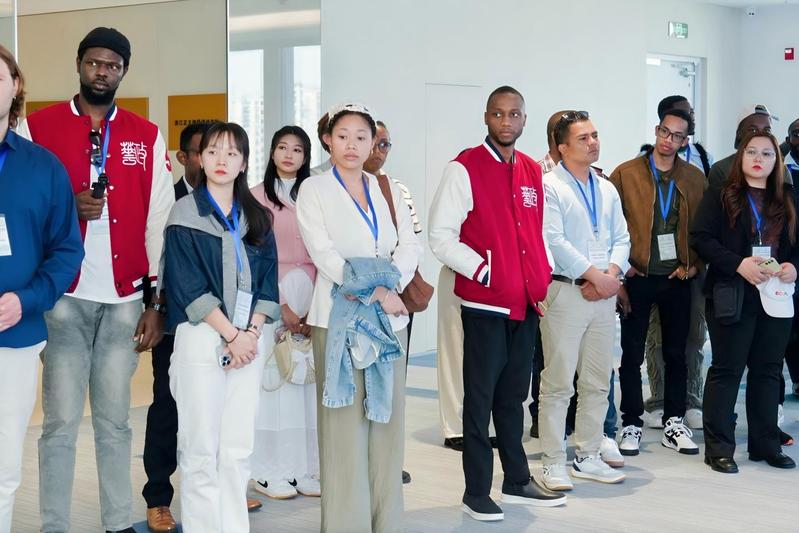
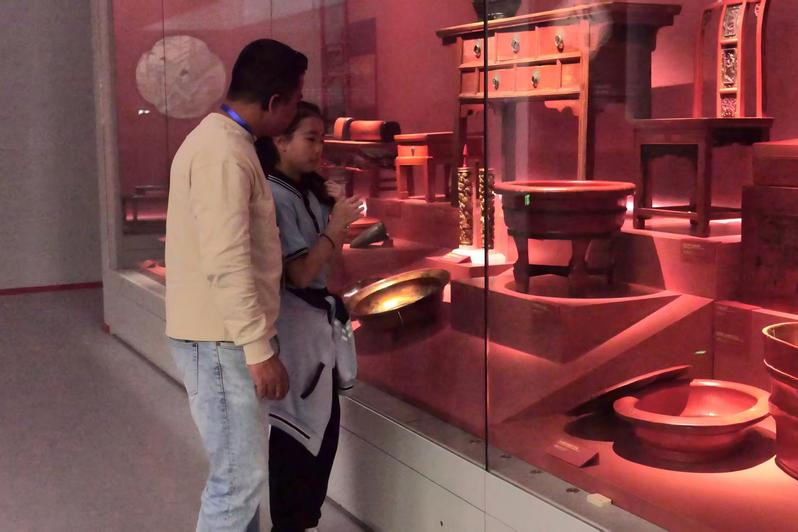
Early the next morning, the international students visited the Zhejiang Provincial Museum (Gushan Campus). In exhibition halls such as "A Long Song Over the Yue Land", rice seeds from the Hemudu culture, jade cong from the Liangzhu civilization, and porcelain from the Southern Song Dynasty enabled the students to systematically trace the historical context of Zhejiang from prehistoric civilization to the prosperity of the Southern Song Dynasty, marveling at the profound and long-standing Chinese civilization.
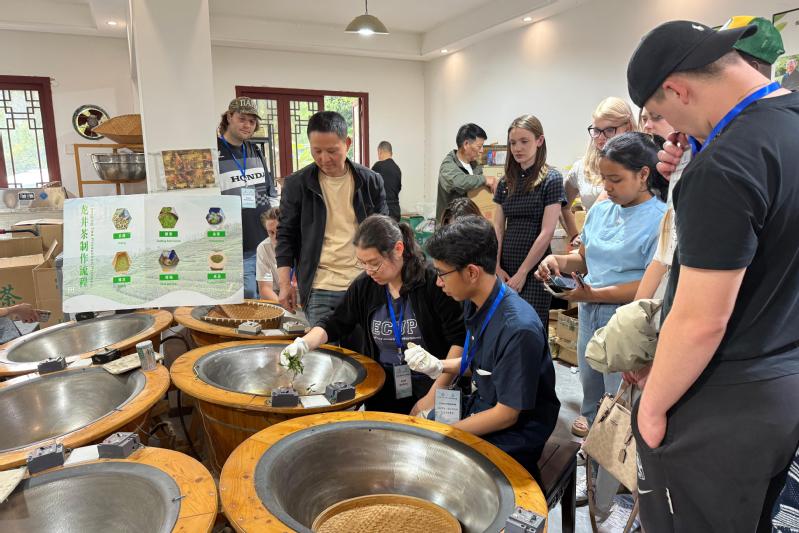
In the afternoon, the teachers and students traveled to Meijiawu Tea Culture Village. Amid the lush greenery, the international students experienced teapicking and stir-frying techniques, brewed tea around a stove, and listened to intangible cultural heritage inheritors tell the story of Longjing tea. From the skills on their fingertips to the mellow taste on their tongues, everyone experienced the Chinese tea ceremony spirit of "harmony, tranquility, joy and sincerity" amid the curling tea fragrance.
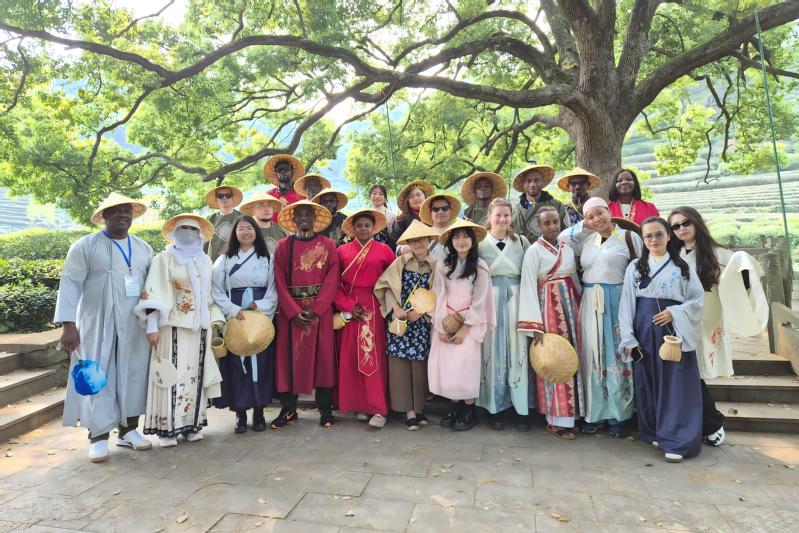
On the last day of the itinerary, everyone arrived at Qiandao Lake, known as "the most beautiful water under heaven". After enjoying the ecological beauty of "boats gliding on the lake and people wandering in a painting" by boat, a special national conditions education class was held at Hairui Temple. At Hairui Temple, the international students learned in detail about the life story of Hairui, an honest official of the Ming Dynasty,who built water conservancy projects, severely cracked down on corruption, and advocated for the people during his tenure as county magistrate of Chun'an.Combining the allusion of Hairui's "the most forthright memorial in the world", the instructor explained to the international students the traditional Chinese culture's admiration for "honest officials" and the eternal pursuit of "fairness and justice". This "integrity culture" spanning time and space resonated with the international students' yearning for the spirit of the rule of law.
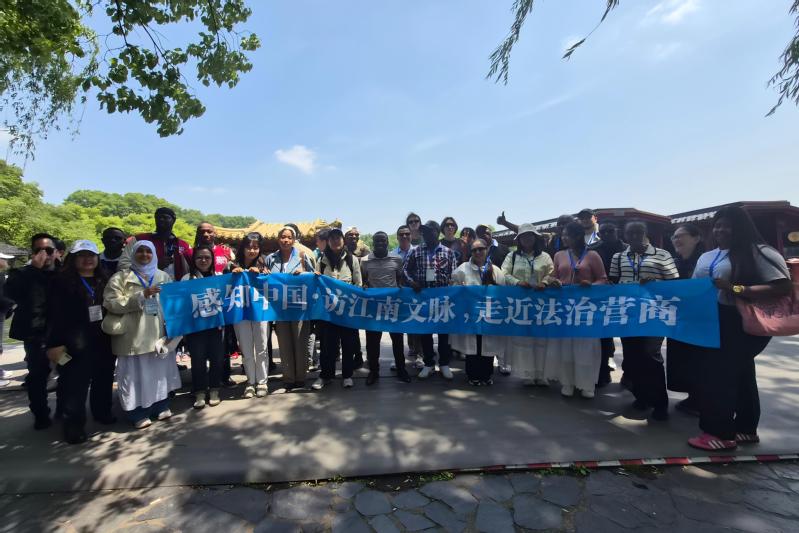
This activity was not only a visual feast but also a spiritual baptism. The international students all stated that through this practice, they not only witnessed China's green mountains and clear waters but also comprehended the profound connotations of China's rule of law spirit and humanistic heritage.
With the strong support and careful guidance of the China Scholarship Council, the"Perceive China" brand activity, which integrates social practice and cultural experience, came into being. As a classic project of the International School, it has successfully gone through nine semesters. Giving full play to the unique advantages of local humanistic resources, the school carefully plans and leads international students to explore cultural heritage sites, historical cities, and representative Chinese urban and rural communities. This allows students to immerse themselves in the charm of fine traditional Chinese culture, revolutionary culture, and advanced socialist culture, and understand a real, three-dimensional, and comprehensive China from multiple perspectives.