
A delegation of 76 students from the UNIDROIT Asia-Pacific Regional Centre Summer School, hosted by East China University of Political Science and Law, visited the conference hall of the Shanghai Municipal People's Congress (SMPC) on July 2. The visit offered participants an opportunity to gain first-hand insight into China’s system of people’s congress and Shanghai’s approach to urban governance. Chen Jing, Deputy Director of the Standing Committee of the Shanghai Municipal People's Congress, and Xiao Kai, President of East China University of Political Science and Law (ECUPL),attended the event and engaged in discussions with the students.
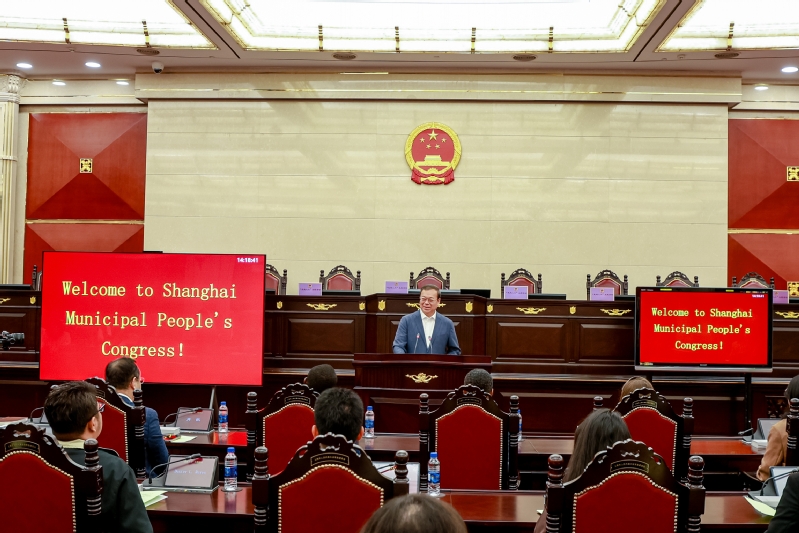
During the visit, Chen Jing introduced the structure, functions and responsibilities of the SMPC and its Standing Committee. He also briefed the delegation on Shanghai's ongoing economic and social development. Chen said that, under President Xi Jinping's strategic guidance,Shanghai is committed to building the "Five Centers" and accelerating its growth into a socialist modern international metropolis with global influence. The city consistently adheres to apeople-centered approach to development and operates under the rule of law across all governance aspects. He added that Shanghai has continued to advance whole-process people’s democracy while strengthening efforts to protect and improve people’s livelihoods. The city is now among the world’s safest international metropolises and has one of the highest life expectancy.
Alively Q&A session followed. Students from Pakistan, Thailand, Georgia, Mongolia, Russia, France, the Philippines, and South Africa actively raised questions on topics including overseas investment, climate change mitigation, the promotion of artificial intelligence (AI) development, legislative planning, and etc.
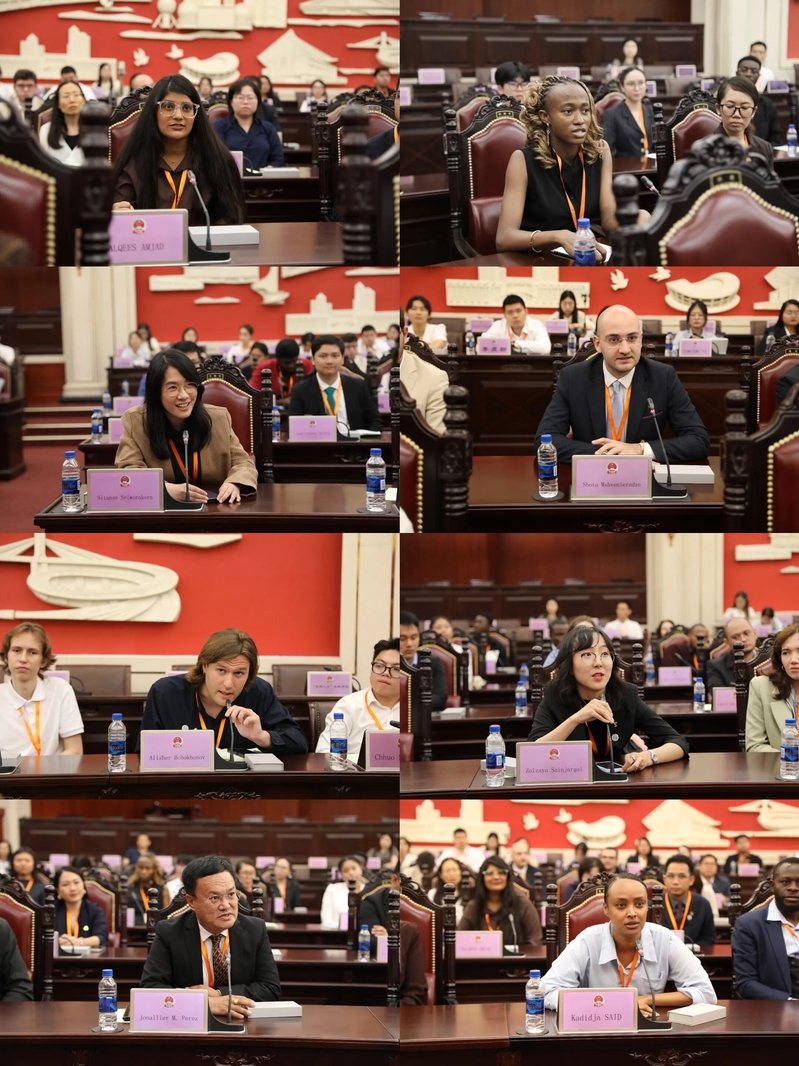
Inresponse to a question from a Russian participant on how the people’s congress system supports Shanghai’s economic development, Liu Zhengdong, a deputy to the Shanghai Municipal People’s Congress, said targeted legislation had been introduced to support both economic growth and technological innovation. He noted that supervisory mechanisms, including law enforcement inspections and special inquiries, played an important role in ensuring the effective implementation of regulations and in creating a stable and predictable environment for economic development. Addressing a question from a Mongolian participant on how legislation could balance regulation and development in the field of artificial intelligence, Han Lu, also a deputy to the Shanghai Municipal People’s Congress, outlined the Standing Committee’s work in making use of the legislative authority granted to Pudong New Area. She said these efforts were aimed at developing a balanced regulatory framework that encourages innovation while maintaining appropriate oversight, thereby supporting the sustainable development of technology and industry.
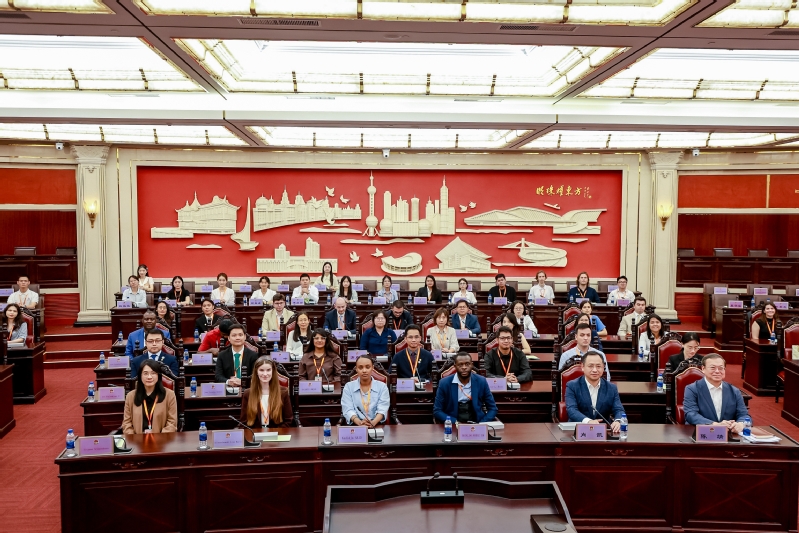
Participants noted that the visit had provided a valuable opportunity to deepen their understanding of China’s legislative system, examine rules of private international law, and conduct comparative legal analysis within the broader context of Shanghai’s development as a leading international commercial and financial hub. They also expressed appreciation for the city’s urban landscape and dynamic vitality, which further enriched their overall learning experience.
ECUPL President Xiao Kai stated that the centenary of UNIDROIT this year lends particular significance to the summer school, which focuses on unified rules for cross-border commerce. The visit to the Shanghai Municipal People’s Congress had enabled participants to better connect theoretical learning with China’s legislative practice.Xiao further noted that Shanghai’s continued opening-upand the development of its “Five Centres” have generated growing demand for legal professionals with strong expertise in foreign-related legal affairs. Atthe same time, the city’s efforts to attract international organizations are creating important opportunities for young legal talent from around the world.He expressed the hope that East China University of Political Science and Law and the Shanghai Municipal People’s Congress would establish a regular, long-term mechanism for academic and research cooperation. Such cooperation, he said, would help internationalstudents develop a more balanced understanding of China’s legislative system,facilitate exchanges on private law across jurisdictions, and support China’slegal development in a broader international context.